 Longway Home Bed & Breakfast
▪ Journal ▪
Longway
Home Bed and Breakfast offers occasional lodging in the historic Ernest
L. Longway House. In 1926, Mr. Longway built this home for his young
family. He was a home-building contractor in northern Indiana and southern
Michigan for 50 years where he built many fine houses, including several
in a local historic district.
January 15, 2018
Our old house was built in 1926 by contractor Ernest Longway as a home for his young family. His fifty-year career here started with our home and the one next door he built to sell. Soon after that, he began building other fine houses around our community. Some of them are now landmark homes in an admired historic district.
▪▪
September 22, 2015
Our old house was built in 1926 by contractor Ernest Longway as a home for his young family. His fifty-year career here started with our home and the one next door he built to sell. Soon after that, he began building other fine houses around our community. Some of them are now landmark homes in an admired historic district.
Our house served as his home and office. Here he met with clients and drafted their house plans in what's now our den. His big mahogany drafting desk found a new home in 1950. And the exterior side door for guests was removed about then. But we still imagine him hunched over his desk in the room as he sketched the plans for many houses.
 ©Cliff
Zenor
©Cliff
Zenor
Recently, one of his landmark houses sold at auction. We toured it twice during open houses. We lingered in every room and all around the riverfront yard. At the end of one visit, we met the adult daughter who was selling the house for her parents. We told her how much we liked the place and about our connection with it. She said her parents were the second owners when they bought it in the early 1970s. They loved the house and did little to alter it, so it looks much the way it did in 1936 when it was built.

We were surprised to find the daughter and her husband had the blueprints laid out in the kitchen. We poured over them. This was the first time we'd seen Mr. Longway's house plans. And we felt a pang of pride when we saw his name on each page.

The daughter generously made copies of the blueprints for us. So now we can frame and hang them in the old office where they were created 80 years ago. That's the kind of full-circle old-house story we like.
▪▪
July 6, 2015
It’s been a good summer for insects in our garden. Mild temperatures and regular rains have provided the right
conditions for some of our favorite small creatures and the plants they
feed on. We’ve seen a species of spider unfamiliar to us that will take
us to the field-guide books soon for identification. And a surprising
number of butterflies have made their way to the perennials in the
border beds and the annuals in planters.
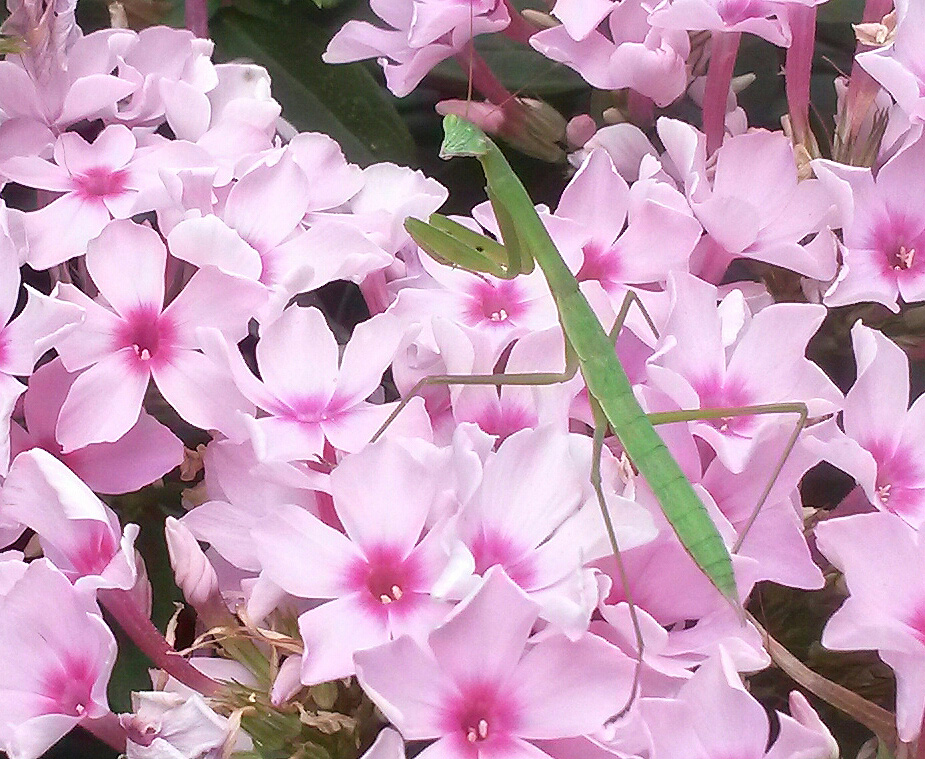
But the biggest surprise was a couple of praying mantises (the plural is really "mantids") that have resided here all summer. They staked claims to the perennial geraniums and black-eyed susans. There, they have grown from one-inch youngsters to four-inch winged adults while feeding mostly on assorted flies that visit those flowers.
 ©Cliff
Zenor
©Cliff
Zenor
The Chinese mantis (Tenodera
sinensis) is not native to the U.S., as you'd guess from its
name. It was imported as a novelty or
by mistake – stories go both directions. It hunts other insects and
relies on camouflage and stealth to hide from its prey and its enemies.
There is a North American native species of mantis, but we’ve never seen it in our
garden or in the wild. That’s how uncommon and well disguised it is.
The debate continues about how beneficial
non-native praying mantids are versus how they compete with native
mantids and how they feed on beneficial native insects like bees,
butterflies and other pollinators. But regardless how that discussion
goes, we will always be fascinated by them in the garden or in the
prairie. The juvenile one in this photo waits on the tall garden phlox for an
unsuspecting insect. I told Mary, its nickname could be “shepherd
bug” since it is keeping watch over its phlox.
▪▪
January 10, 2015
Frost forms in a fascinating way on our windows. On the coldest days of winter, moisture crystallizes in jagged patterns on the panes.This may be the only redeeming quality of the old aluminum combination storm windows on some of our original windows. And since my attempts to seal them have never worked, we're resigned, for now, to admiring the icy artwork that grows on the glass.
Winter arrived last week with sub-zero nights and snowy days. It wasn't long until window frost followed. The long crystalline fingers, called "frost ferns" when they grow like these, develop when water vapor condenses and freezes on the inside of the outer pane.
 ©Cliff
Zenor
©Cliff
Zenor
The longer and closer I stare at the frost, the more details I see in the icy landscape. Glassy rivers and streams stretch below and between serrated ridges and peaks. A frigid world advances across the window with each cold hour. And I'm lost in a paradise below zero. My attention is broken when the form of a passing bird darts across the crystal plane. And my thougths return to the someday task of replacing the "new" storms with replicas of the wooden originals that will seal tightly and make this ice kingdom an extinct world.
▪▪
September 2, 2014
Late summer is prairie time. After a long growing season, the plants of the tallgrass prairie are at their grandest. Midsummer flowers have bloomed and faded. Now late-season forbs and prairie grasses tower above them, dwarfing resident white-tailed deer and the occassional hiker. The scent of the grassland hints less at the perfume of perennials and more at the musky fragrance of mature foliage.
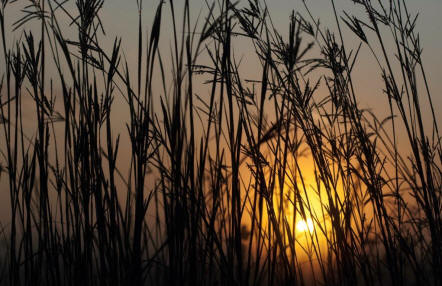
The biggest contributor to the deeper aroma is big bluestem (Andropogon gerardii), a grass that reaches nearly ten feet tall by now. It's the signature plant of the tallgrass prairie that once swept from Indiana to Colorado and stretched from Oklahoma to Canada. Before white settlers pushed West, prairies covered 170 million acres of our country. Soon farmers turned under the tallgrasses with cold-steel plows. City dwellers paved over the richest soil on the planet. And now there is less than one-tenth of one percent of the original grassland remaining.
 ©Cliff
Zenor
©Cliff
Zenor
Named for its stiff blue-purple stalks, this prairie grass was and still is vital to prairie birds and animals for food -- its seeds and foliage -- and for shelter since it grows in dense thickets. As the sun comes up on this prairie preserve not far from home, I can imagine how easy it would be to get lost in dense, endless acres of bluestems. What an education in prairie life that would be.
▪▪
August 1, 2014
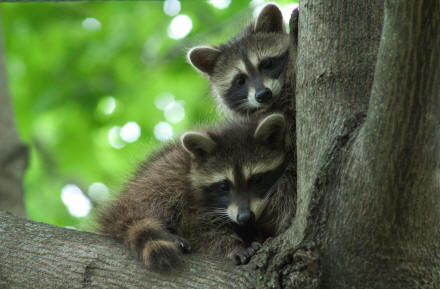
Spring is the time for birth and new life in nature. And summer is the time for rearing those new lives and introducing them to the big world around them. Adult birds and animals are busy nesting and feeding their offspring as spring days lengthen. Now as summer slows down, the parenting picks up as growing youngsters learn the basics of fending for themselves under the watchful eyes of the adults. Recently, we were treated to a few hours of that new independence for young raccoons (Procyon lotor).
A few of these growing babies known as kits were left in the high branches of our backyard maple for the afternoon by their mother while she foraged or looked for a new residence for her young family. Mary spied them as we came home from a walk along the river. Three little ones scrambled down the trunk when they saw us. Two of them stopped in their tracks and stayed up in the branches, but the third scurried under the potting bench where it fell asleep.
 ©Cliff
Zenor
©Cliff
Zenor
After the two kits in the tree got used to us quietly watching them, they snuggled together for a nap in the crotch of two big limbs. I photographed them before they settled down. They snoozed for a while before climbing to a higher perch for more napping. Eventually, clouds blew in and it grew too dark for good photographs. That's when the young raccoon on the ground woke and climbed the tree to join its siblings. They rubbed noses and greeted each other with raspy purring. Then a fourth kit we hadn't seen, climbed down from a higher branch to join the trio and they all clambered up into the foliage and out of sight.
It was getting dusky when Mary spotted the returning mother climbing the maple to where she'd left her youngsters. She called to them and down they came. There was lots of purring and nuzzling and several kits started to nurse. Soon the mother led them back into the upper limbs where they all disappeared. After sunset, the reunited family came down into the yard and spent an hour dining on fallen sunflowers seeds under the bird feeders and drank from the bird baths. What a treat. This wasn't the day we'd planned -- we were going to stain the Adirondack chairs and tables. Watching young raccoons all afternoon instead was a gift from nature we couldn't resist.
▪▪
April 30, 2014
Spring in an Eastern deciduous forest is knee deep. Overhead, the branches of the giant oak, beech and tulip poplar trees are as bare as a winter’s day. It’s only when you look down that you see the proof of the season. Acres of woodland wildflowers carpet the forest floor.
After the last of winter’s snow drifts disappear, the first green shoots pop up through the leaf litter. In a week, they’re joined by waves of wildflowers and all the greys and browns of last year disappear, too. Now all the ground is green and glowing as far as you can see.
In our small backyard, a bit of that floral show spills out from under the tall Norway maple. Once this was a patch of dusty soil where Kentucky bluegrass went to die. We saw a chance to invite into it some of our favorite spring flowers, but most of them are endangered, so they’re legally-protected and rightly so. That’s why we were fortunate to find a licensed grower who raised all our woodland favorites. Every year since then, we’ve added to the patch that’s now a microcosm of the native spring wildflower display in our area.
 ©Cliff
Zenor
©Cliff
Zenor
The parade of blooms starts with hepatica and stretches on for a month until it ends with Jack-in-the-pulpit. All of these flowers are called “ephemerals.” They are fleeting and disappear when the hardwood forest’s leaf canopy unfurls to steal their sunlight.
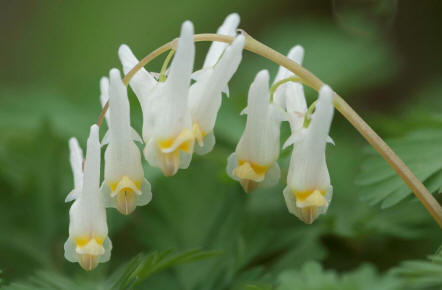
We'd never be able to choose a favorite, but this year the Dutchman’s breeches (Dicentra cucullaria) were especially sweet. A cousin of the Bleeding heart, but much smaller, its stems of flowers look like clotheslines strung with upside-down white pantaloons with yellow belts.
Soon the maple will be fully leafed out and the woodland flowers will spend most of their summer days in its shade. Much of their foliage will stay with us until autumn. But we’ll have to wait until next April before we spy their welcomed surprises in our garden again.
▪▪
December 2, 2013
It’s a season of traditions. Thanksgiving marks the end of autumn with its traditions honoring a bountiful harvest. After the turkey and the trimmings are tended to, our next tradition is bringing home a Christmas tree.

©Cliff Zenor
This year, a seven-foot Fraser fir fills the house with a perfume reserved for the holidays. Strings of white lights give it an old-fashioned glow. Then we trim it with garlands of Norway flags and favorite ornaments we've gotten as gifts through the years or gathered on trips to special places.
The tree is topped with a silken angel Mary's sister made for us many years ago. The angel's beads, pearls, golden wings and brocade reflect the tree's lights as a shining reminder of the first Christmas. Circling the tree, an old Lionel train carries passengers and their gifts home for the holidays in lighted Pullman cars.
Around the trunk, Mary carefully spreads a red felt tree skirt made by her paternal grandmother in 1957. It tells all the traditions of the season in its carefully cut and stitched scenes -- Santa's sleigh and reindeer flying over a sleepy village, snowmen standing watch by a cottage, and an inviting country church tucked in a pine woods.
But the tree skirt's most intricate work is displayed in its traditional nativity scene. Shepherds and sheep, wisemen with their gifts and watchful angels all gather around the stable. Under its sheltering roof, caring parents tend to a sleeping child. And above them all, a bright star glows amid the simple, traditional words "Peace On Earth." That is our wish for you and for us all.
▪▪
October 5, 2013
It’s migration time in the
Midwest. Shorter days signal a change in the seasons and we’ll see the
first migratory songbirds at our feeders any day as they refuel for
their long, southerly trips. Experienced adults guide the juveniles
from their northern nesting grounds to warmer places. Some will travel a
thousand miles before they reach their winter roosts.
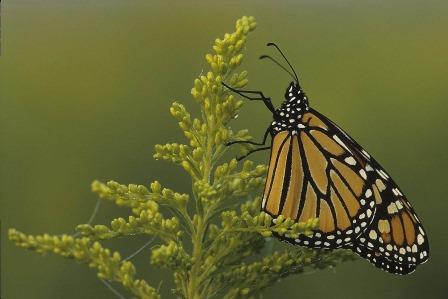
But a journey even more amazing is the annual
odyssey of the monarch butterfly (Danaus
plexippus). Not only will it travel that far or more, it does so
without ever having done it before. In late summer, monarchs east of the
Rockies make their way south, most often to Texas. They’ll fly from
there to a Mexican mountain range where they’ll roost on oyamel fir
trees all winter before they make the journey back to Texas next spring.
©Cliff Zenor
The butterflies that migrate to Mexico are the
last generation of the summer. The monarchs that roosted in the Mexican
woodlands last winter
flew back to the southern U.S. last spring where they mated, laid eggs
and died. The three or four succeeding generations of monarchs
flew northward. They mated, laid eggs and died after two weeks, maybe a
month. Each generation moved farther north until the butterflies reached
their northern limits in Canada. Now the last generation makes its way
south on the signal of shorter days. These monarchs are sturdier than
the earlier butterflies – they’ll need to be to make the long trip,
survive the winter and then make the return trip to Texas.
The whole thing sounds implausible for an
insect. And when you look at it from a butterfly’s point of view, the
story is unimaginable. Of the five hundred eggs laid by one female in
her short life, only one or two percent survive the elements and
predators to mature and lay their own eggs. Add to those odds that the late-summer
butterflies have to make the long flight to a small forest in Mexico
they’ve never seen before, then back to Texas and it sounds downright
impossible.
A monarch butterfly has a four-inch wingspan and
weighs about as much as a paperclip. Its life is focused on sipping
nectar from flowers, finding a mate and laying eggs. And besides the
weather and its natural enemies, it struggles against the loss of
habitat in Mexico and North America. So to do our small part to aid its
survival, we’ll plant more
flowers in our perennial garden beds next year that will provide food for
growing caterpillars and nectar for butterflies of all kinds. It’s a
simple-but-important thing we all can do for these miracles on the wing.
▪▪
September 22, 2013
Autumn arrives today and a cool
breeze ushers it in. We've seen the first signs of the season over the
last few weeks: migrating birds at the feeders and on the river,
resident birds busier and more congenial with each other, monarch
butterflies passing through on their long trip south, and chipmunks with
full cheeks.
©Cliff Zenor
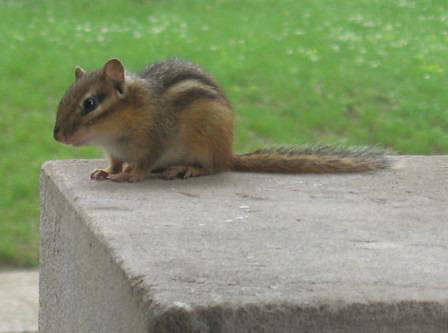
Eastern chipmunks (Tamias striatus) are adaptable to our urban yard. Though they live in forests and woodland edges in the wild, they're at home around our home and cause us little trouble. In fact, they're welcome to clean up fallen sunflower seeds under the feeders and stray holly berries the birds miss.
Occasionally, they bury their seed treasures in
our flower pots and garden beds. We know because we see the dirt flying out
of the planters or we spot seedlings sprouting in the perennial borders.
But most of the booty makes it to their burrows around the yard.
And when a chipmunk perches on our porch to
scold other chipmunks, we can't help but smile and remember summer days
long ago at Mary's family cabin in Minnesota where its northern cousins
kept us company and quickly packed away cast-off watermelon seeds from
our favorite August dessert.
▪▪
August 15, 2013
Late summer is prairie time. Acres of preserved prairie lands come into their own as they progress from unassuming meadows to sweeping grasslands. And in a good year for summer rains like this one, the transformation is magical.
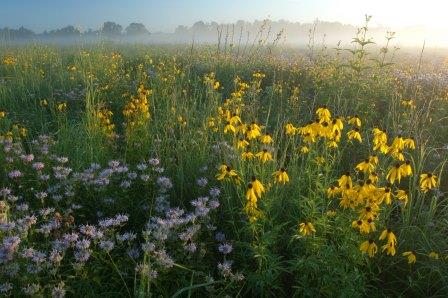
Standing in my favorite preserve in the pre-dawn light, the prairie and I are wrapped in fog. It saturates the seed heads of big bluestems, soaks the leaves of coneflowers and monardas, and collects in the basin-shaped leaves of cup plants where small birds will drink before the water evaporates. The mist moves around me as I walk along a familiar trail that's now a green corridor of tall plants. Goldfinches and wrens awake, surprised to see someone so early. They flit in to inspect me before they sip from the cup plants. And as the rest of the prairie world wakes up, my head spins from the musky perfume of the tallgrass prairie.
©Cliff Zenor
In August and September, native flowers flourish and grasses grow higher than a bison's eye. The knee-high spring and early-summer plants are hidden after their turn in the sun. Now prairie giants tower over them and me. Big bluestem grass, cup plant, compass plant and prairie dock reach up six to eight feet tall. If I stepped off the path, I'd disappear just like the spring flowers.
Today, most prairies are beholden to benefactors who've preserved or restored them. The prairie lands that once reached from the forest edges of Indiana to the foothills of the Rockies and swept from Oklahoma to the Canadian prairie provinces have been reduced to pockets of what scientists call one of the world's most-endangered environments. Standing in this 60-acre remnant, I can imagine it going on for ever. And I think about how the original tallgrass prairie shaped the lives of the native Americans who understood it and the settlers who traversed it before most of it gave way to the plow.
▪▪
July 21, 2013
Some notable plants were
already growing on our lot when we bought this old house: a three-storey-tall
American holly tree and three mature rhododendrons up front; a sizable
Norway maple tree in the back. These trees and shrubs were the
elements that defined the corners of the house and the yard. We fell in
love with them and the identity they gave our home.
But during our first spring, several surprises
popped up around the yard. We discovered a small bed of irises of an
unknown variety that sprang up and eventually bore beautiful, fragrant blooms. About
the same time, along the backyard fence, small sprouts pushed up out of
an old flower bed. Over the next few weeks, we watched while the
seedlings twisted around anything they could find, then climbed up the
fence and reached for the sky.
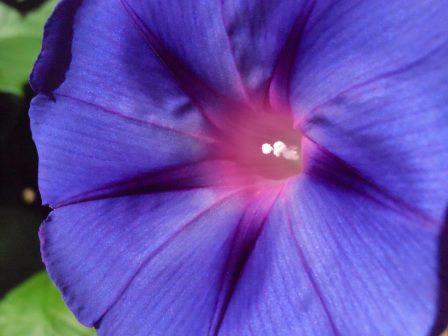
We guessed they were morning glories (Ipomoea
purpurea) and we looked forward to the day the first blooms showed
themselves. When they did, we were treated to a display of dozens
of deep-purple flowers with red-star throats on robust, climbing and
trailing vines. A little research in garden books and seed catalogs
revealed the morning glory’s variety name:
Grandpa Ott’s.
©Cliff Zenor
The story goes that it’s a Bavarian variety of morning glory brought to America in 1870s by an immigrant family of farmers named Ott. In 1972, Baptist John Ott, who lived on a 40-acre farm near St. Lucas, Iowa, gave seeds from it to his granddaughter, Diane Ott Whealy. She and her husband, Kevin Whealy, were inspired by them and other collected seeds Grandpa Ott gave them. A few years later, they founded the Seed Savers Exchange at Heritage Farm in Decora, Iowa. The Exchange is a non-profit organization dedicated to preserving and sharing heirloom plants. Their collection has grown to more than 12,000 unique heritage varieties and it's one of the largest in the world.
From the simple practice of saving and passing
along special seeds sprouted a monumental effort to
collect and perpetuate genetically-diverse heirloom seeds and food
plants for coming generations.
▪▪
November 7, 2012
It's the beginning of November, the middle of
autumn and the end of fall color. Except for our Norway maple. Most
other trees' branches are bare, but many Norways (Acer platanoides) are
in full color, which is never remarkable compared to their Sugar (A.
saccharum) and Red (A. rubrum) maple cousins. Still, their golden-yellow
leaves are our last hint of autumn and we welcome the stained-glass glow
outside the upstairs windows on sunny days.
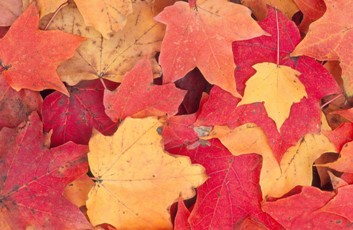
©Cliff Zenor
Scientists know that trees turn colors as their
leaves cease the production of the green chlorophyll of summer and the
remaining carotenoid pigments are unmasked in bright reds, yellow and
oranges.
The what and why are well known, but exactly when is a mystery. Since my early days in horticulture, I've speculated with others that it's connected to changing seasonal conditions. I believe it's never one thing, but a combination that can change year to year.
Together day length, daily temperatures,
moisture and frosts influence when leaves change color. But I'd add to
them the conditions of the entire past growing season like temperature
extremes, rainfall, drought, diseases and environmental stresses. All of
these conditions couple to start the color-change process and speed or slow its
progress.
But science or speculation, we still enjoy the last color of autumn as these falling leaves drift along the sidewalk or spin down on our shoulders like confetti while we tuck the perennial border gardens in for the winter under the maple's glowing golden dome.
▪▪▪